The knock came early, sharp and deliberate, slicing through the familiar chaos of a weekday morning. I was elbow-deep in routine—packing lunches, wiping spilled juice from the counter, negotiating peace between siblings who all seemed to need something at once. Life as a single parent had taught me to move quickly, to multitask out of necessity rather than talent. Nothing about that morning suggested it would become one of the most consequential days of my life .
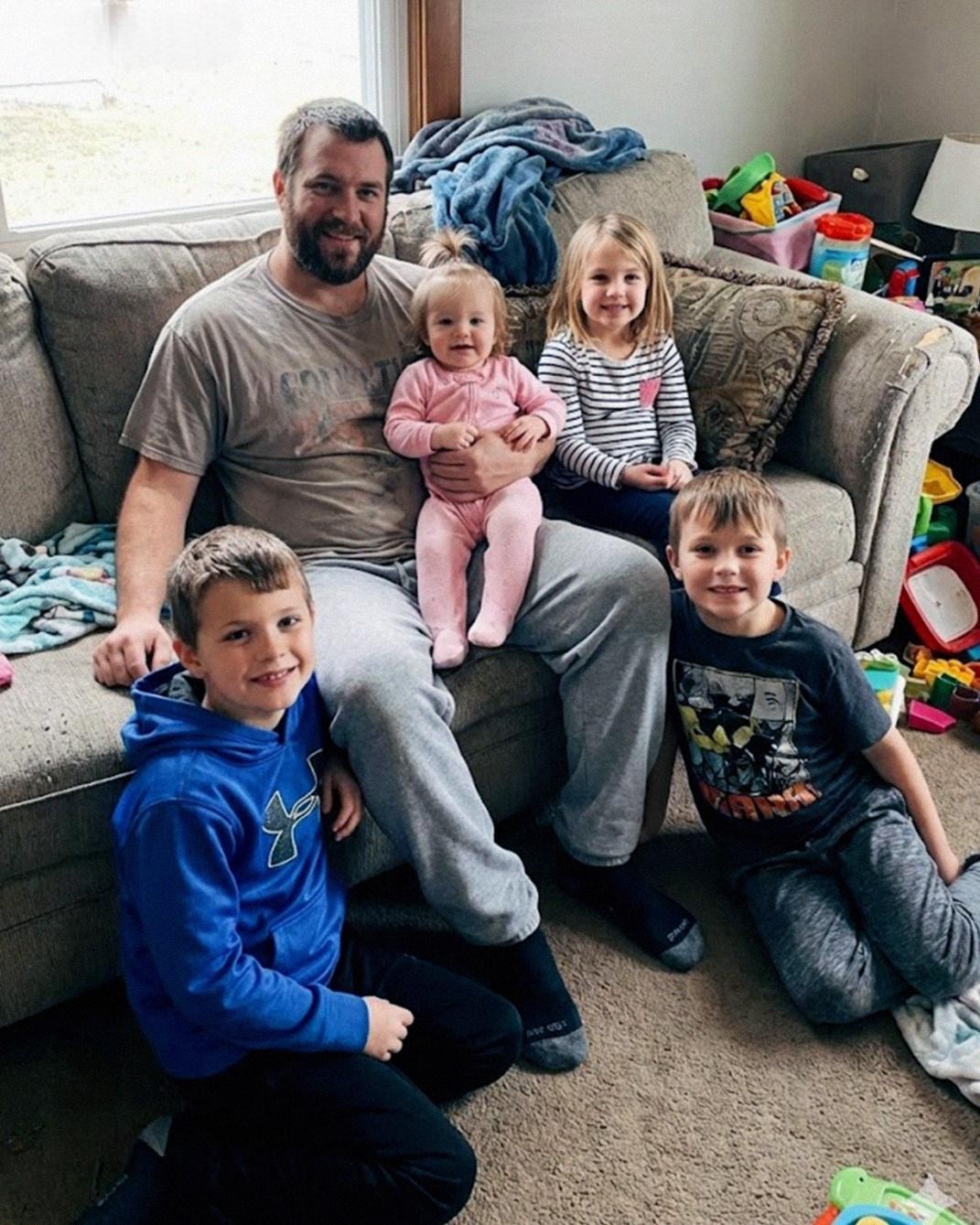
My name is Lucas. I’m forty-two, a widower, and the father of four children who depend on me for everything from breakfast to reassurance that the world is still safe. Two years earlier, my wife Emma had died of cancer less than a year after our youngest was born. The diagnosis came quietly, like exhaustion dressed up as something manageable. It wasn’t. By the time we understood what we were facing, time had already begun to run out. When she died, I didn’t have the luxury of falling apart. I had mouths to feed, school forms to sign, bills to juggle, and children watching how I handled grief even when they didn’t have words for their own.
Since then, life has been narrow and practical. I work full-time at a warehouse, and when the shift ends, I take whatever side jobs I can find—repairs, hauling furniture, patching drywall. Our house shows its age. The roof leaks when it rains hard. The dryer only works if you kick it just right. The minivan rattles like it’s warning me before every drive. But the kids are warm, fed, and loved, and that has been enough to keep me moving forward.
The day before that knock, we had stopped at the grocery store after school and daycare. It was an ordinary errand wrapped in the usual budget anxiety. Milk, cereal, apples, diapers. Maybe peanut butter if the total stayed low enough. The kids were loud and messy in the way only children can be—arguing over bread, narrating imaginary games from the shopping cart, singing songs on repeat. I was tired, cold, and focused on getting through the list.
That’s when I saw it.
Tucked between bruised apples in the produce section was a diamond ring. At first, I assumed it was costume jewelry, the kind kids lose from vending machines. But when I picked it up, the weight told a different story. It was solid. Real. Expensive in a way that could have quietly solved a dozen problems in my life.
For a brief, dangerous moment, my mind ran numbers. Repairs. Groceries. Braces. Rent buffer. Relief. The thought lasted seconds, but seconds can matter. Then my daughter laughed, proud of nothing in particular, and I felt the weight of four pairs of eyes watching me learn what kind of man I was going to be.
I slipped the ring into my pocket, intending to take it to customer service. Before I could, a frantic voice cut through the aisle. An older woman appeared, disheveled and panicked, searching the floor as if she had lost something irreplaceable. When she saw the ring in my hand, she gasped—not with surprise, but with relief so raw it hurt to witness.
She told me it was her husband’s ring. A fiftieth-anniversary gift. He had died three years earlier. She wore it every day. Losing it felt like losing him all over again.
When I handed it back, she pressed it to her chest like a lifeline. She thanked me, looked at my children, and told me they were being raised with love. Then she walked away, clutching her past in her fist, and I assumed that was the end of the story.
It wasn’t.
The knock the next morning came from a man in a tailored coat standing beside a black Mercedes that looked absurd on our cracked street. He introduced himself as Andrew. The woman from the grocery store was his mother. She had told him everything. She had remembered my name. She had needed him to know that someone had chosen honesty when it would have been easier not to.
He handed me an envelope and left without ceremony.
I didn’t open it right away. I waited until the kids were dropped off, until I was sitting alone in the car outside daycare, hands still dusted with flour from breakfast. Inside was a check for fifty thousand dollars. Enough to fix the van, repair the house, refill the fridge without fear, and finally exhale after years of holding my breath.
There was a note. Simple. Direct. He thanked me for reminding his mother that good people still exist. For proving that kindness survives even when life makes it inconvenient. He told me to use it for my family.
I cried in the driver’s seat, not from shock alone, but from the release of pressure I had carried silently for years.
That money didn’t change who I was. It changed what I could breathe through. The brakes were fixed. The roof repaired. My youngest slept better with new bedding that soothed her skin. We ordered pizza one Friday night without counting slices. The kids started dreaming out loud again—about trips, rides, futures.
I learned something essential through all of it. Integrity isn’t heroic. It’s quiet. It shows up in grocery aisles and cold mornings and choices no one applauds. And sometimes, when life has taken almost everything, it gives something back—not as reward, but as proof that decency still matters.
I didn’t return the ring expecting anything. I returned it because my children were watching. And in doing so, I taught them something more valuable than money: who we are when no one is forcing us to be good.
That lesson is the inheritance I hope lasts longest.