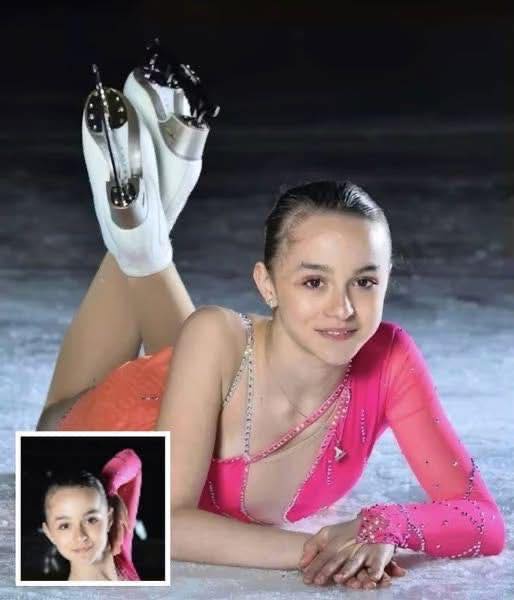
The serene, snow-dusted landscape of Val Rendena, nestled within the Trentino region of northern Italy, is currently shrouded in a profound and heavy silence. On a crisp Monday morning that should have been the start of another routine week of school and athletic training, the local community was instead shattered by a tragedy that claimed the life of one of its brightest young stars. Matilda Ferrari, a fifteen-year-old figure skating prodigy whose grace on the ice had made her a local icon and a national prospect, was killed in a devastating traffic accident while walking to her morning classes.
Matilda was the embodiment of youthful potential. In the competitive and demanding world of figure skating, she had begun to distinguish herself not just through her technical skill and precision, but through an emotional maturity that resonated with judges and spectators alike. To her neighbors in the small, tight-knit towns of the Rendena Valley, she was more than just an athlete; she was a symbol of what hard work and a gentle spirit could achieve. Her loss has left a void in the community that transcends the sport she loved, touching everyone from the local shopkeepers to the fellow students who shared her daily bus commute.
The incident occurred as the first light of morning was beginning to touch the surrounding peaks. Matilda was on her way to school, navigating a familiar route that thousands of students take across Italy every day. She was attempting to cross State Road 239—a primary artery that winds through the mountainous terrain—intending to reach the bus stop that would transport her to her educational commitments. According to preliminary reports from the carabinieri and local traffic authorities, Matilda was within the designated crosswalk when the unthinkable happened.
A heavy cement mixer, owned by the local firm Cunaccia Construction, was traveling along the same stretch of road. In a collision that lasted only seconds but would change the fabric of the community forever, the massive industrial vehicle struck the fifteen-year-old. The sheer physical disparity between the heavy machinery and the young girl made the impact catastrophic.
The emergency response was immediate and immense, reflecting the urgency of the situation and the rural community’s instinct to protect its own. Within minutes of the first emergency call, a symphony of sirens filled the valley. Paramedics from the local health services, teams of firefighters, and specialized trauma doctors arrived on the scene. Recognizing the severity of her injuries, a medical helicopter was dispatched from Trento, its rotors thundering against the valley walls as it sought a landing site near the accident coordinates.
For over an hour, the first responders worked with desperate, synchronized precision. They utilized every piece of advanced medical technology at their disposal, performing life-saving maneuvers on the asphalt where, just moments before, a young girl had been thinking about her upcoming exams and skating routines. However, despite the heroic efforts of the medical teams, the damage was too severe. Matilda Ferrari was pronounced dead at the scene, her life ending just a few hundred yards from the safety of her front door.
The emotional weight of the morning reached its peak when Matilda’s parents arrived at the cordoned-off section of State Road 239. There are no words in the human lexicon to describe the scene as they were met by officials and forced to confront the impossible reality of their daughter’s death. The valley, usually a place of Alpine beauty and quiet dignity, became a site of unimaginable grief.
As the community begins the long process of mourning, the legal and investigative machinery has begun to turn. The driver of the cement mixer, whose identity has been withheld during the initial stages of the inquiry, was taken to a local medical facility in a state of severe shock. Once he is medically cleared, he will be subject to intense questioning by investigators who are working to reconstruct the exact sequence of events.
The investigation is currently focused on the traffic signals at the intersection. While it is confirmed that Matilda was in the crosswalk, early reports suggest that the truck may have had a green light at the time of the collision. Investigators are currently reviewing dashcam footage from nearby vehicles and checking the timing of the signal lights to determine if there was a malfunction or a tragic lapse in visibility. In the Italian legal system, such incidents often trigger investigations into “road homicide,” a serious charge that ensures a thorough judicial review of all factors involved, from mechanical failure to driver distraction.
The impact of Matilda’s death has rippled far beyond the borders of Trentino. The Italian Ice Sports Federation (FISG) and the broader figure skating community have expressed their condolences, noting that the sport has lost a talent that was only just beginning to reach its zenith. Coaches who worked with her described a girl who was the first to arrive at the rink and the last to leave, a teenager who balanced the grueling schedule of an elite athlete with a genuine kindness toward her peers.
In Val Rendena, makeshift memorials have already begun to appear. Bunches of white flowers, skate laces, and handwritten notes from schoolmates have been placed near the site of the accident. The tragedy has also reignited local debates regarding the safety of the State Road 239 corridor, particularly for pedestrians and students during the dimly lit morning hours. Residents have called for increased safety measures, such as enhanced lighting and lower speed limits in residential zones, hoping that some measure of systemic change can emerge from this heartbreaking loss.
As the investigation continues, the focus remains on the Ferrari family and a community that must now find a way to navigate a future without Matilda. Her story is a somber reminder of the fragility of life and the suddenness with which a bright light can be extinguished. In the skating rinks where she once glided with such effortless beauty, there is now a heavy stillness. The skates are silent, but the memory of the girl who wore them will remain etched in the hearts of everyone who knew her. Matilda Ferrari didn’t just skate; she soared, and though her journey was cut tragically short, the grace she displayed during her fifteen years will not soon be forgotten.
In the coming days, as the valley prepares to lay its daughter to rest, the bells of the local churches will toll not just for a fallen athlete, but for a child of the mountains who was taken far too soon. The investigation may eventually provide legal answers, but it will never be able to replace the warmth and promise that walked across the road that Monday morning.